

Steel, steal!

In medieval India, steel technology reached great heights, matching the dominance of the country's textile industry. But a different kind of craftsmanship thrived in central Asia.
Brace yourself for a narrative filled with suspense, intrigue, and echoes of battles long past.
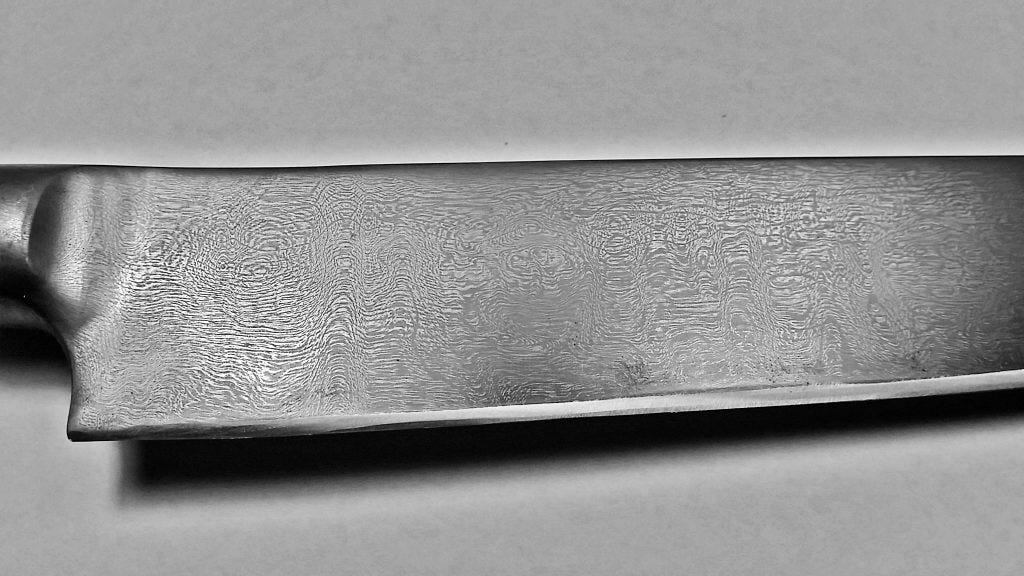
Damascus steel.
The legendary material that has fascinated people for centuries. Its origins shrouded in secrecy. Its properties unparalleled.
Tales of its extraordinary strength and sharpness have been whispered among craftsmen and warriors alike.
Chapter 1. Uprising
We find some mentions, but no one knows how or exactly when from central Asia it began to spread outward during the early Middle Ages.
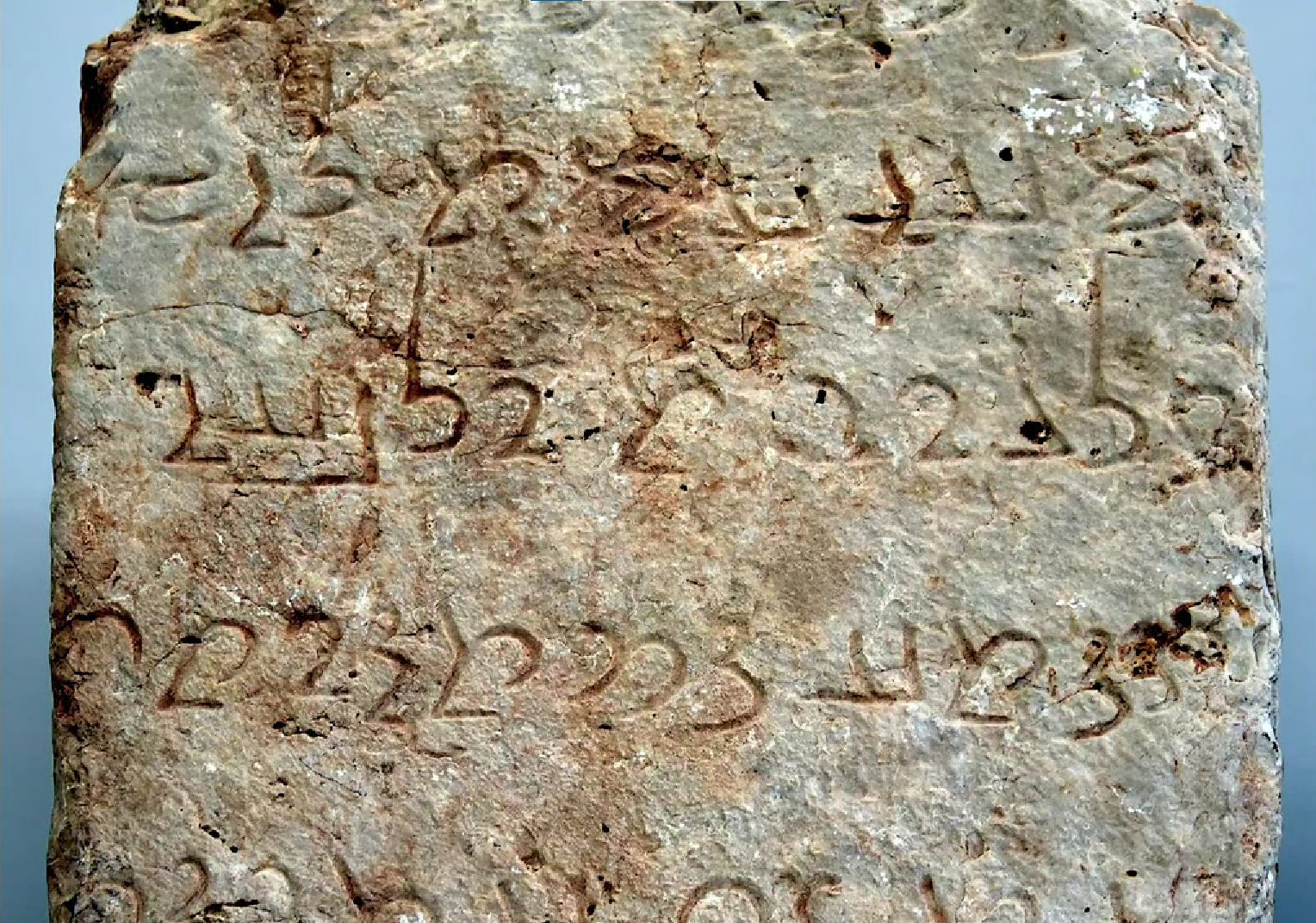
Merchant, Travellers and their caravans carried it along the silk route to Africa, Europe and China. They never knew what they were carrying will set in motion of events that will change the face of civilizations.
The evolution of international trade is a testament to humanity's desire for exchange and economic development. From ancient trade routes to the modern era of globalization, international trade has evolved, adapting to advancements in technology, changes in political ideologies, and shifting global dynamics.
— International Trade Council
What I am talking about is - Crucible Steel technology.
Chapter 2. The snag
Iron, which is at the core of weapon systems, has already been in use in central Asia for hundreds of years by the time it became the steel making center. But it has many disadvantages in practice.
It can be made pure, quite tough and rust-free, but it is very soft. Easy to mold but difficult to weaponize.
This is such a huge disadvantage that even otherwise formidable German soldiers have to retire from the heat of the battle to jump on their swords up and down repeatedly to straighten them which acquire a curvature when stroked on the roman shields.
Chapter 3. The fix
Surprisingly, a solution has been found in introducing some carbon to the metal, which form super hard iron carbide crystals. Though due to chemistry, iron can acquire carbon quickly resulting in hard but brittle structures.
Instead of bending, a weapon made out of this tend to shatter when used. This is not conducive in times of battle.
The trick? Control the carbon content in the iron, down to between 0.5% to 2% of carbon which makes 1:0.02 iron to carbon ratio. The result – a shining metal, a steel, an alloy of hard and brittle iron carbide embedded into soft and flexible pure iron, giving the best of both worlds.
This alloy then mixed with pure iron giving a legendary swirling pattern.
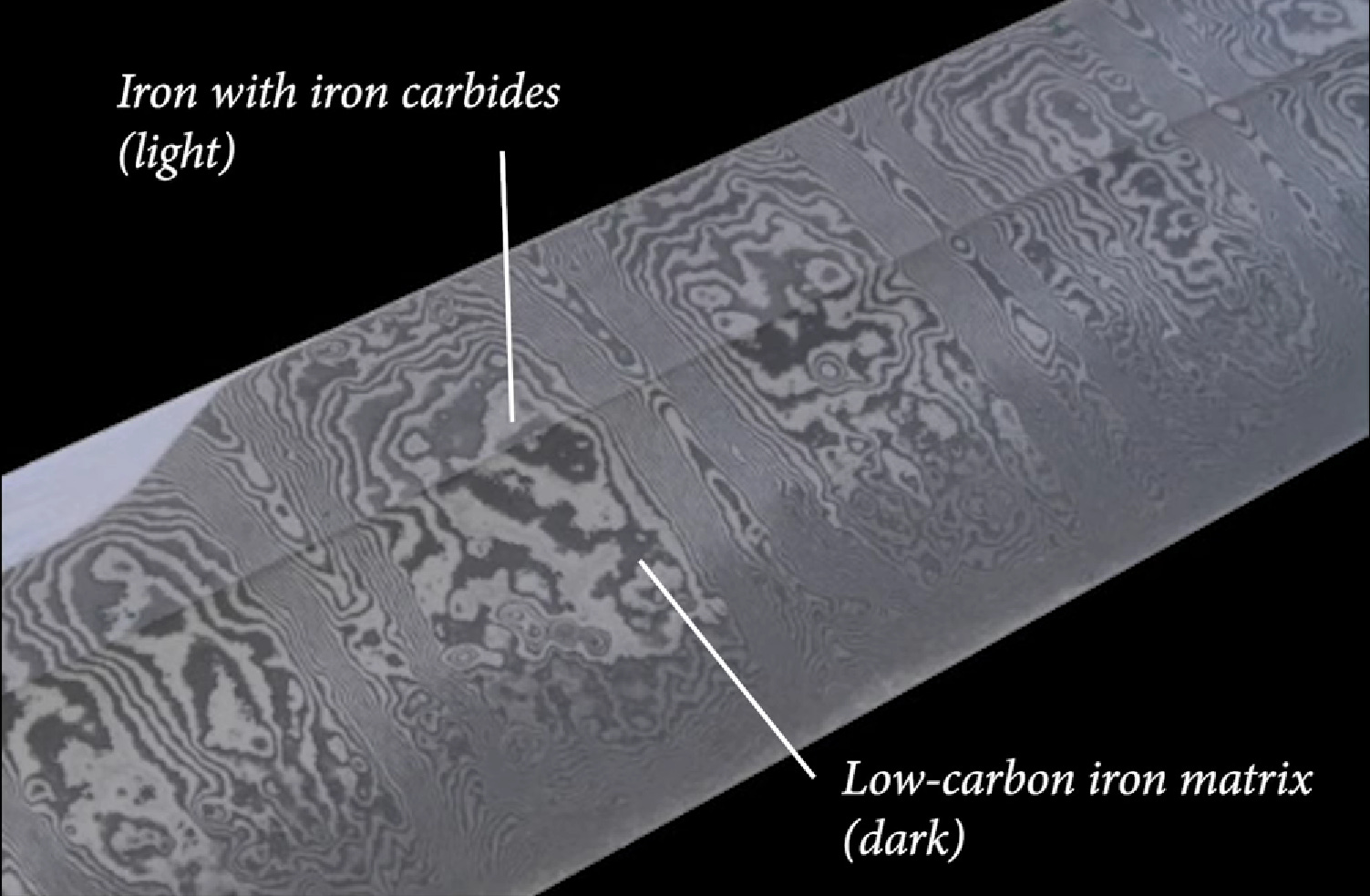
It may sound simple but with ancient medieval tech, it is very hard to do, even harder to do well.
Wootz (Indian), Pulad (Persian), Fuladh (Arabic), Bulat (Russian) and Bintie (Chinese) are all names for historical ultra-high carbon crucible steel.
The wootz steel then introduced by Arabs to the central Asian markets. Damascus steel blades were started to be smithed in the Near East from ingots of Wootz steel either imported from Southern India or made in production centers in Sri Lanka or Khorasan, Iran
The other counterpart of steel manufacturing depends on the “pulad steel” from Persia.
Chapter 4. Vanishing act
In roughly 1220’s AD, the central Asian steel making heartland was hit by Genghis khan, the casualties of his invasion were at well over half a million in the city of Merv alone.
As a result of this Mongol conquest, the backbone of steel exports of Europe shattered, though small artisans and craftsman still continued making the steel in small shops.
During the first century AD, the central Asia (now, Uzbekistan and Turkmenistan) was renowned as place for better swords, spears and Armours. By 800 A.D, this fame spread across for better blades holding high toughness, flexibility and sharpness.
Chapter 5. Name
Few hundred years later they acquired the misnomer “Damascus” steel and generally considered as ancient kryptonite. The term "Damascus steel" itself likely traces its roots to the medieval city of Damascus, Syria.
Another possibility is that it is named after a particular sword smith called “Al-damasqi”. This type of branding by craftsman was common at that period.
These swords have distinctive patterns of banding and mottling reminiscent of flowing water, in a "ladder" or "rose" pattern.
Chapter 6. Legend & the test
A popular tale of crusader king, Richard I of England tried to impress sultan of Egypt, Saladin by cutting an anvil into half with single blow of his sword.
Saladin answered by, tossing a silk scarf in the air and holding his Damascus steel sword underneath it and the scarf drifted to the ground in two pieces shows the strength of Damascus steel.
Later in 11th century, Persian scholar Al-Biruni, listed the scarf test with three others test to check for authenticity of the steel to called “pulad steel”
the sword should give a clear ring when struck,
cut through an iron bar without the blade being notched, &
bend to 90°, spring back undeformed.
The final word
This was the tale of “Damascus” a lost metal. From Steel to mysterious Byzantine weapon ignited on contact with water. Will unfold in new stories.
Subscribe to Arth for more such intriguing tales.
Share with friends to make them awe.
Until next time… शुभमस्तु|