

Why fiction; over facts?

Have you ever wondered why do you think so much?
Yes, you. The overthinker. The dreaded scoot of emotions. The revenant. The atheist? You might not be any of those things but still you think.
Whenever I sit to write my wandering thoughts, to my diary - this question arises from within. For most of my life - I disliked self-help books. Though, it is not because I can’t wrap my head around them but more so because they are popular.
I disliked every popular thing as more and more people is running towards it. My self-outcaste nature make me do more so often if not every time, to scoot from the crowd. But that’s not the discussion we are having today - for some time.
This habit of mine make me closer to fiction books and comics giving my child brain a moment of breath from all those schooling, pedagogy.
The Induction.

How to have images of something dense? not your friends sense of humor. but human body?
Yes, X-rays - but what about the internal organs with thick muscles and skins layering over specific cells and tissues. X-rays limited ability to only visualize bones.
The interaction of fiction with a brilliant mind created for answer the very same question. For doctors trying to diagnose conditions such as tumors, internal bleeding, and brain injuries, the inability to see what was going on inside the body was a serious obstacle
Spark.

It was 1977, and the world was about to witness the release of one of the most influential films in cinematic history: Star Wars. With its groundbreaking visuals and visionary storytelling, it captured the imaginations of millions, setting the stage for a technological revolution.
But what if I told you that Star Wars—yes, the epic space opera—had an unexpected connection to one of the most important medical inventions of the 20th century?
Visions to the visionary.
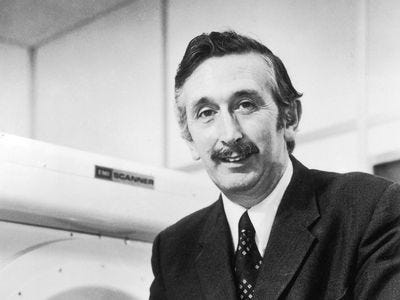
Enter, Sir Godfrey Hounsfield. A British engineer working for the company EMI (Electromagnetic Instruments), Hounsfield was far from a household name in 1977. But little did anyone know that he was about to embark on a path that would lead to a discovery that would save millions of lives.
At the time, Hounsfield was developing what would eventually become the first commercial computed tomography (CT) scanner. His idea was revolutionary—using X-rays to create detailed cross-sectional images of the human body, allowing doctors to see inside their patients without having to perform invasive surgery.
The concept was bold, but it wasn’t easy. There were countless technical hurdles to overcome. Traditional X-rays only produced flat, two-dimensional images, and doctors had to make their best guesses about what lay hidden inside the body. Hounsfield’s goal was to create something entirely new: a three-dimensional, cross-sectional view that would revolutionize medical imaging.
Imagined.
In the midst of Hounsfield’s research, something momentous was happening across the globe. George Lucas’ Star Wars had just hit theaters, changing the way the world thought about technology and the future.
The film introduced groundbreaking special effects, immersive sound design, and a visual language that seemed to take technology to places it had never been before.
And it wasn’t just Star Wars’ fantastical space ships or the fearsome Imperial Walkers that captured the world’s imagination—it was the technology itself.
In fact, it was the film’s depiction of futuristic technologies that sparked something in Hounsfield’s mind. As he continued his work on the CT scanner, he realized that the sci-fi visions of the future weren’t that far from reality.
Inspiration.
In Star Wars, the characters used advanced computers to map entire star systems and scan for objects hidden in space. These machines were able to create detailed images of distant galaxies, breaking down massive amounts of data into manageable, understandable forms. Hounsfield realized that these sci-fi depictions were essentially the future of imaging—only this time, it wasn’t distant galaxies that needed to be scanned, but the human body.
With this newfound inspiration, Hounsfield began to push forward in a way that had once seemed impossible. His machines had to not only generate detailed images, but do so quickly and accurately.
The complex calculations and sophisticated processing that Star Wars showcased in its fantastical scenes suddenly became a guide for what was possible in real life.
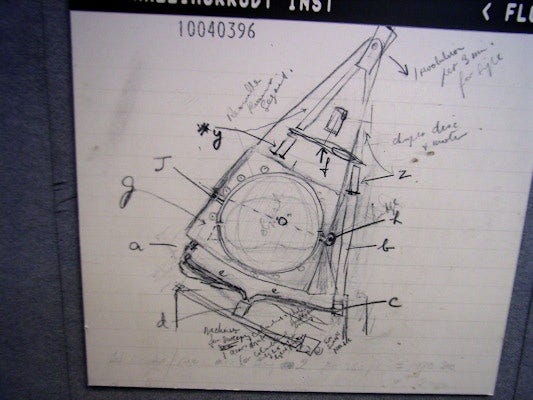
However, in 1971, the first prototype of the CT scanner was finally put to use at the Atkinson Morley Hospital in London. It was a success. For the first time, doctors were able to see internal organs in unparalleled detail, changing the way medical diagnoses were made forever.
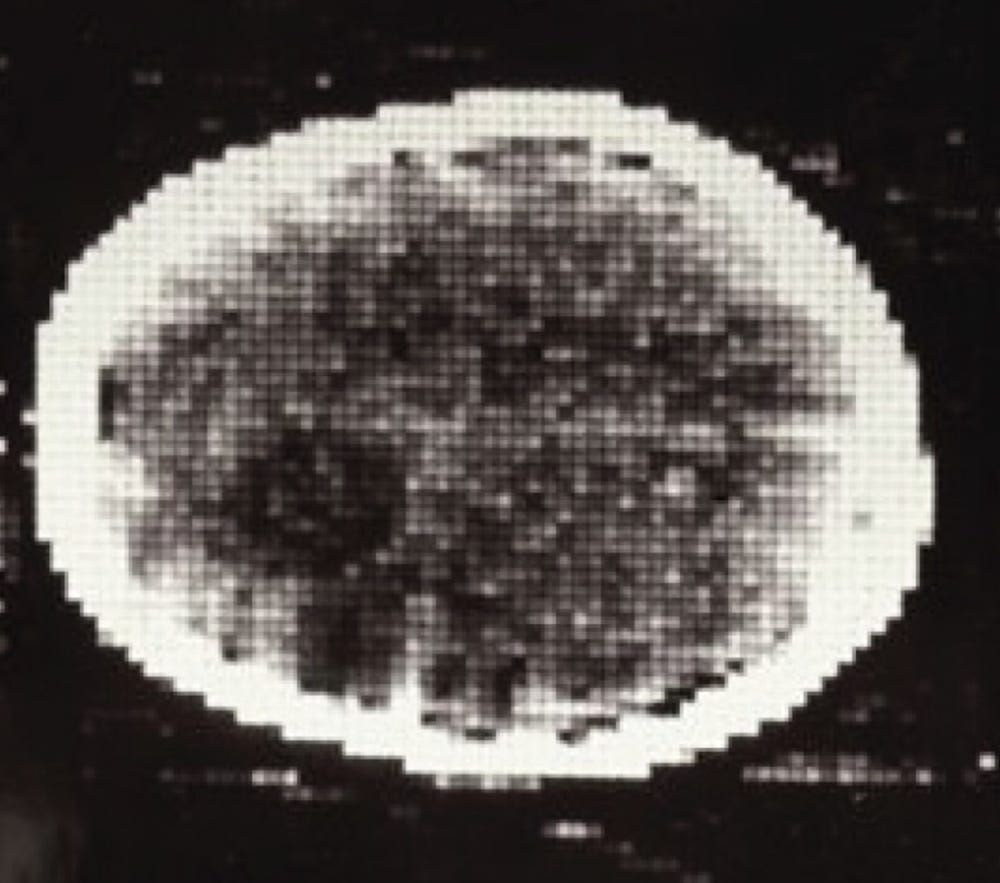
On October 1, 1971, the first patient underwent a CT scan. The procedure was groundbreaking—a world first. The scanner whirred and clicked, sending beams of X-rays through the patient’s body. A computer then reconstructed the data into detailed images, showing cross-sectional “slices” of the patient’s brain. The results were astonishing. What had once been a blurry, speculative guess based on external examination was now a clear, visual understanding of what lay beneath the skin.
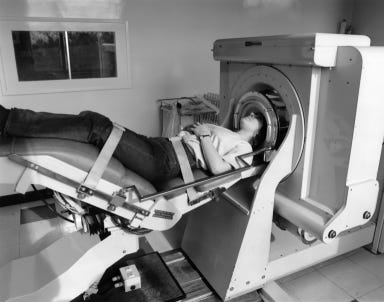
Over time, Hounsfield’s work on the CT scanner became a standard tool in medical practice, saving countless lives and transforming healthcare as we know it. For his work, he was awarded the Nobel Prize in Physiology or Medicine in 1979.
Influence.
As for Star Wars, the film’s technological influence didn’t stop with the imagination of Sir Godfrey Hounsfield. The film’s groundbreaking use of special effects and its depiction of futuristic technology continued to inspire generations of scientists, engineers, and medical professionals.
Just as Star Wars pushed the boundaries of imagination, so too can the science fiction of today inspire the medical breakthroughs of tomorrow.
And who knows? The next generation of dreamers, inspired by the worlds of sci-fi, may just be the ones to change the world yet again—no lightsaber required.
Until next time… share and stay curious.